Whether you’re mounting shelving, securing heavy machinery, or installing structural supports, concrete anchors are essential for fastening objects to concrete, brick, or masonry surfaces. Choosing the right type of anchor is crucial for ensuring strength, stability, and long-term durability.
This guide will break down the most common types of concrete anchors, how they work, and the best applications for each.
1. Wedge Anchors – Best for Heavy-Duty Loads
✔ Best for: Structural support, machinery, heavy-duty shelving
✔ How They Work: Expands against the concrete when tightened for a strong, permanent hold
✔ Installation: Drill a hole slightly deeper than the anchor length, insert the anchor, then tighten the nut to expand the wedge
🔗 Shop Wedge Anchors on Amazon
2. Sleeve Anchors – Best for Versatility
✔ Best for: Brick, block, and softer concrete surfaces
✔ How They Work: A metal sleeve expands when the nut is tightened, gripping the hole’s walls
✔ Installation: Pre-drill a hole the same size as the anchor, insert the anchor, and tighten
🔗 Find Sleeve Anchors on Amazon
3. Concrete Screws – Best for Easy Installation
✔ Best for: Light to medium-duty applications (TV mounts, electrical boxes, handrails)
✔ How They Work: Self-tapping threads bite into pre-drilled holes for a secure hold
✔ Installation: Use a hammer drill and a carbide bit to create the hole, then drive in the screw with a drill or impact driver
🔗 Check Out Concrete Screws on Amazon
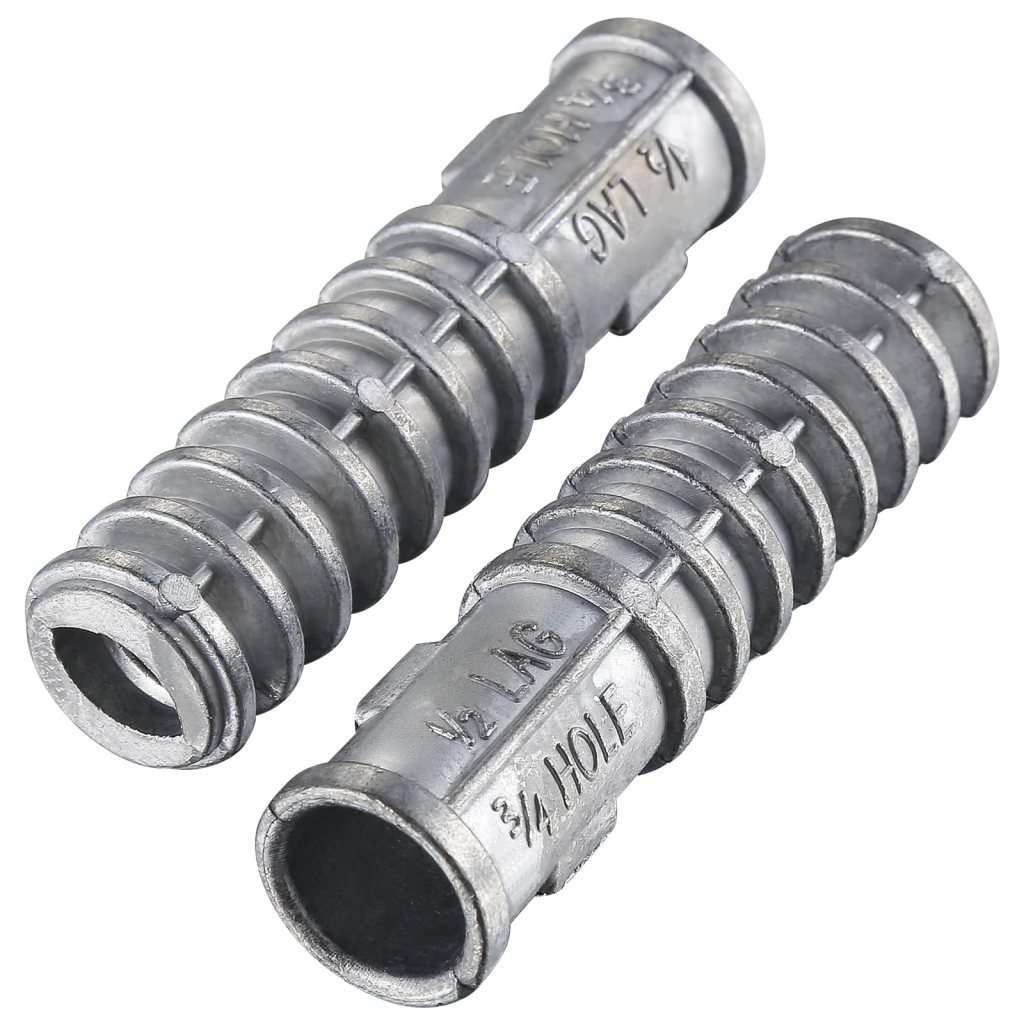
4. Drop-In Anchors – Best for Hanging Fixtures from Ceilings
✔ Best for: Suspending objects like pipe hangers, lighting, and HVAC systems
✔ How They Work: A metal sleeve expands inside the hole when a setting tool is used, creating a secure, threaded opening
✔ Installation: Drill a hole, insert the anchor, then use a setting tool to expand it before attaching bolts
🔗 Find Drop-In Anchors on Amazon
5. Toggle Bolts – Best for Hollow or Weak Concrete
✔ Best for: Mounting objects to hollow block, drywall, or lightweight concrete
✔ How They Work: The spring-loaded toggle wings expand behind the wall, distributing weight across a larger area
✔ Installation: Drill a hole, insert the toggle, and tighten until the wings grip behind the surface
6. Adhesive Anchors – Best for Maximum Strength in Cracked Concrete
✔ Best for: Cracked concrete, high-load applications, earthquake zones
✔ How They Work: A chemical adhesive secures a threaded rod or rebar inside the drilled hole
✔ Installation: Use an epoxy or chemical adhesive, fill the hole, insert the anchor, and allow it to cure before loading
🔗 Find Adhesive Anchors on Amazon
Choosing the Right Concrete Anchor
| Anchor Type | Best For | Load Strength | Reusable? |
|---|---|---|---|
| Wedge Anchors | Heavy-duty structural loads | Very high | No |
| Sleeve Anchors | Brick, block, softer concrete | Medium | No |
| Concrete Screws | Light to medium loads | Medium | Yes |
| Drop-In Anchors | Hanging fixtures, ceilings | High | No |
| Toggle Bolts | Hollow block, weak surfaces | Medium | No |
| Adhesive Anchors | High-load, cracked concrete | Very high | No |
Installation Tips for Concrete Anchors
✔ Use the Right Drill Bit: Most anchors require a carbide-tipped masonry bit for precise hole sizing
✔ Drill Deep Enough: Make sure the hole is slightly deeper than the anchor to allow for proper expansion
✔ Clean the Hole: Remove dust and debris using compressed air or a wire brush before inserting the anchor
✔ Use the Correct Fastener: Match the anchor size and type to your project’s weight requirements
Final Thoughts
Choosing the right concrete anchor ensures safety, stability, and durability in your installation. Whether you need a heavy-duty wedge anchor for structural loads or a quick-install concrete screw, there’s a solution for every job.
Best Overall: Wedge Anchors
Best for Light-Duty: Concrete Screws
Best for Ceiling Mounts: Drop-In Anchors
🚀 Upgrade your toolbox and get the best anchors for your next project today!


 Rex Rates
Leave a comment