
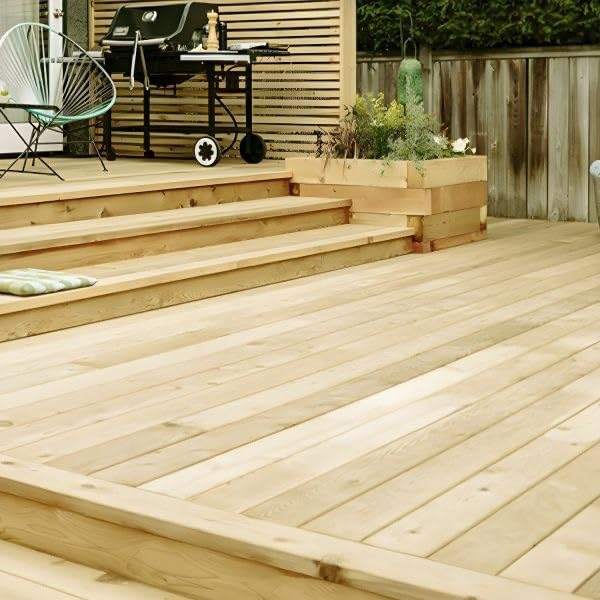
When working with pressure-treated wood, choosing the right nails is crucial to ensure long-term durability and structural integrity. The chemicals used to preserve treated wood can be highly corrosive, which can damage fasteners over time, leading to rust, structural failure, and staining.
To prevent these issues, it’s essential to use corrosion-resistant nails that can withstand moisture, chemicals, and outdoor exposure. This guide breaks down the best types of nails for pressure-treated wood and how to choose the right ones for your project.
Why Nail Selection Matters for Pressure-Treated Lumber
The preservatives in pressure-treated wood help resist rot, moisture damage, and insects, making it ideal for decks, fences, framing, and outdoor structures. However, these same chemicals can:
✔ Accelerate corrosion in standard nails
✔ Cause fasteners to weaken and fail over time
✔ Leave unsightly rust streaks on wood surfaces
Using the wrong nails can lead to safety hazards, reduced longevity, and costly repairs. That’s why only corrosion-resistant fasteners should be used with pressure-treated lumber.
Best Nails for Pressure-Treated Wood
Here are the top nail options that are specifically designed to withstand the harsh conditions of treated wood.
1. Hot-Dipped Galvanized Nails – Best Overall
Hot-dipped galvanized (HDG) nails have a thick zinc coating, which provides strong corrosion resistance against the chemicals in pressure-treated wood. These nails are affordable, durable, and widely used in construction.
✔ Best for: Decking, fencing, framing, outdoor wood projects
✔ Advantages: Cost-effective, readily available, and highly resistant to rust
🔗 Shop Hot-Dipped Galvanized Nails on Amazon
2. Stainless Steel Nails – Best for Harsh Environments
For maximum durability, stainless steel nails are the best choice—especially in coastal, high-moisture, and marine environments where rust is a major concern. Stainless steel won’t corrode even when exposed to saltwater and extreme humidity.
✔ Best for: Marine projects, high-moisture areas, premium outdoor builds
✔ Advantages: Superior corrosion resistance, long lifespan, no rust stains
🔗 Find Stainless Steel Nails on Amazon
3. Polymer-Coated Nails – Best for Reduced Friction
Polymer-coated nails have a protective layer that acts as a barrier against chemicals and moisture, reducing corrosion. The smooth coating also lowers friction, making installation easier and preventing splitting in the wood.
✔ Best for: Siding, trim work, general outdoor construction
✔ Advantages: Smooth driving, reduced wood splitting, corrosion protection
🔗 Explore Polymer-Coated Nails on Amazon
4. Mechanically Galvanized Nails – Best Budget Option
Mechanically galvanized nails are coated with zinc through a mechanical process, providing moderate protection against corrosion. While not as durable as hot-dipped galvanized nails, they are still a cost-effective alternative for less demanding applications.
✔ Best for: Interior framing, temporary structures, low-exposure projects
✔ Advantages: Budget-friendly, moderate corrosion resistance
🔗 Browse Mechanically Galvanized Nails on Amazon
Additional Nail Selection Tips
- Choose the Right Nail Length: For structural integrity, nails should be at least 2.5 times longer than the thickness of the wood you’re fastening.
- Use Ring-Shank or Spiral-Shank Nails for Extra Holding Power: These nails grip better than smooth-shank nails, preventing wood from pulling apart.
- Follow Local Building Codes: Many regions require corrosion-resistant fasteners for pressure-treated wood projects, especially for decks and framing.
Final Thoughts
Selecting the right nails for pressure-treated wood is essential for durability, strength, and long-term performance. Using galvanized, stainless steel, or polymer-coated nails will help prevent rust, corrosion, and wood damage—ensuring your outdoor projects last for years.


 Rex Rates
Leave a comment